It was still the end of the pandemic, so due to the limited circumstances, I conducted my first intervention by asking my Instagram followers about their experience with mental health problems. It is easy to use tool and they require minimal effort to create and can be shared quickly with followers, making them accessible to a wide range of users.
This methodology aimed to gather some pieces of information on attitudes, opinions, behaviors, and basic characteristics of my social media followers as well as provided me with an opportunity to gather feedback and inspiration for further research. It was more like a starting point for my research.
My followers have been asked the following questions:
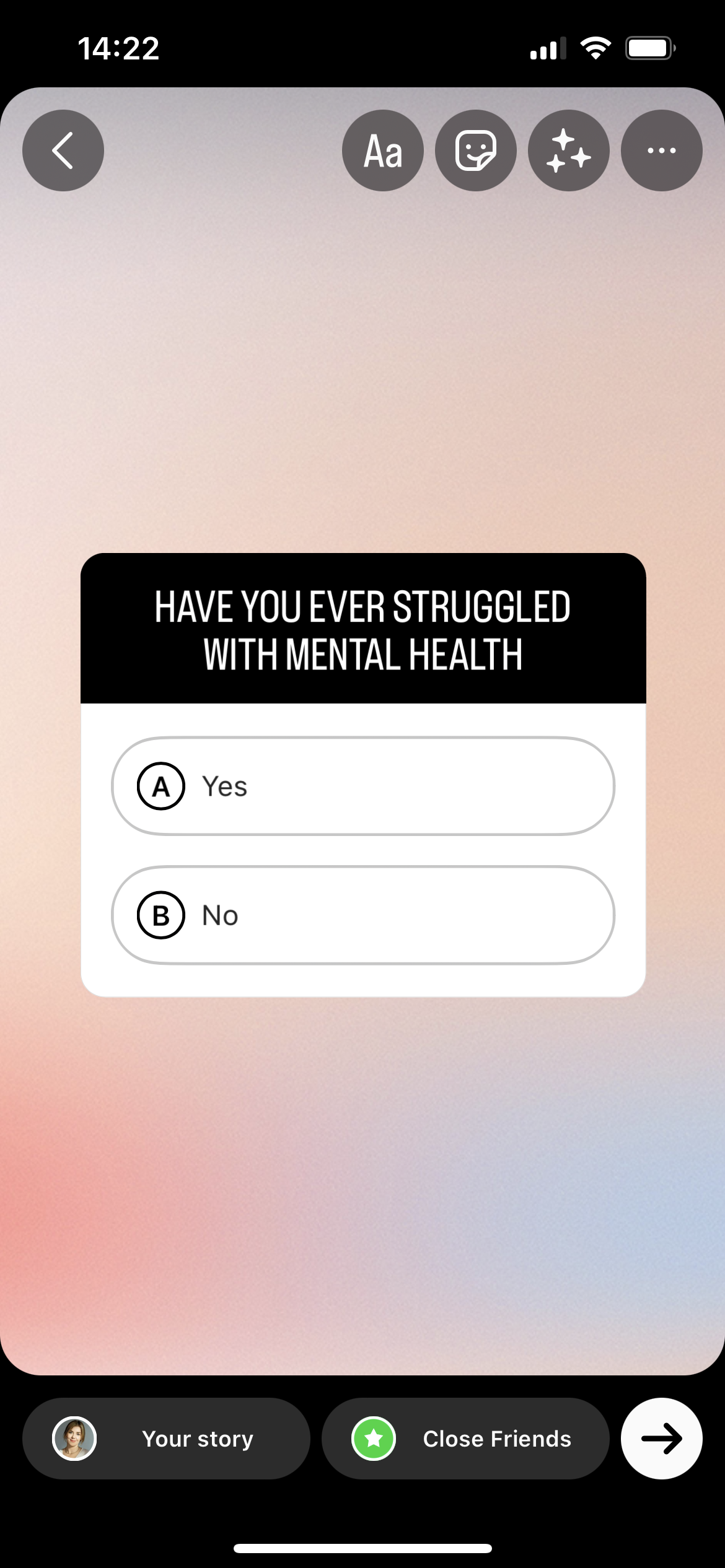
Have you ever struggled with mental health?
How old were you when you first struggle with mental health?
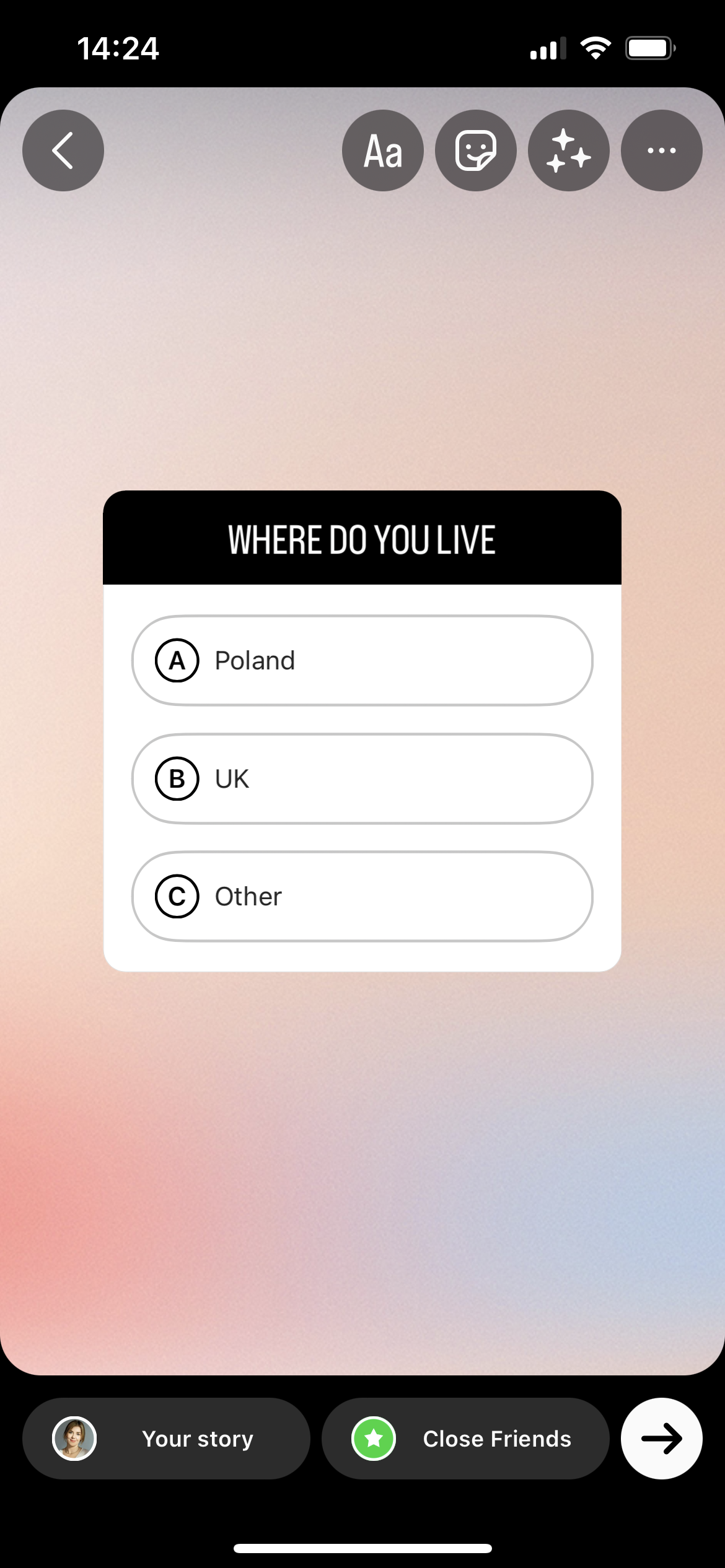
Where do you live?
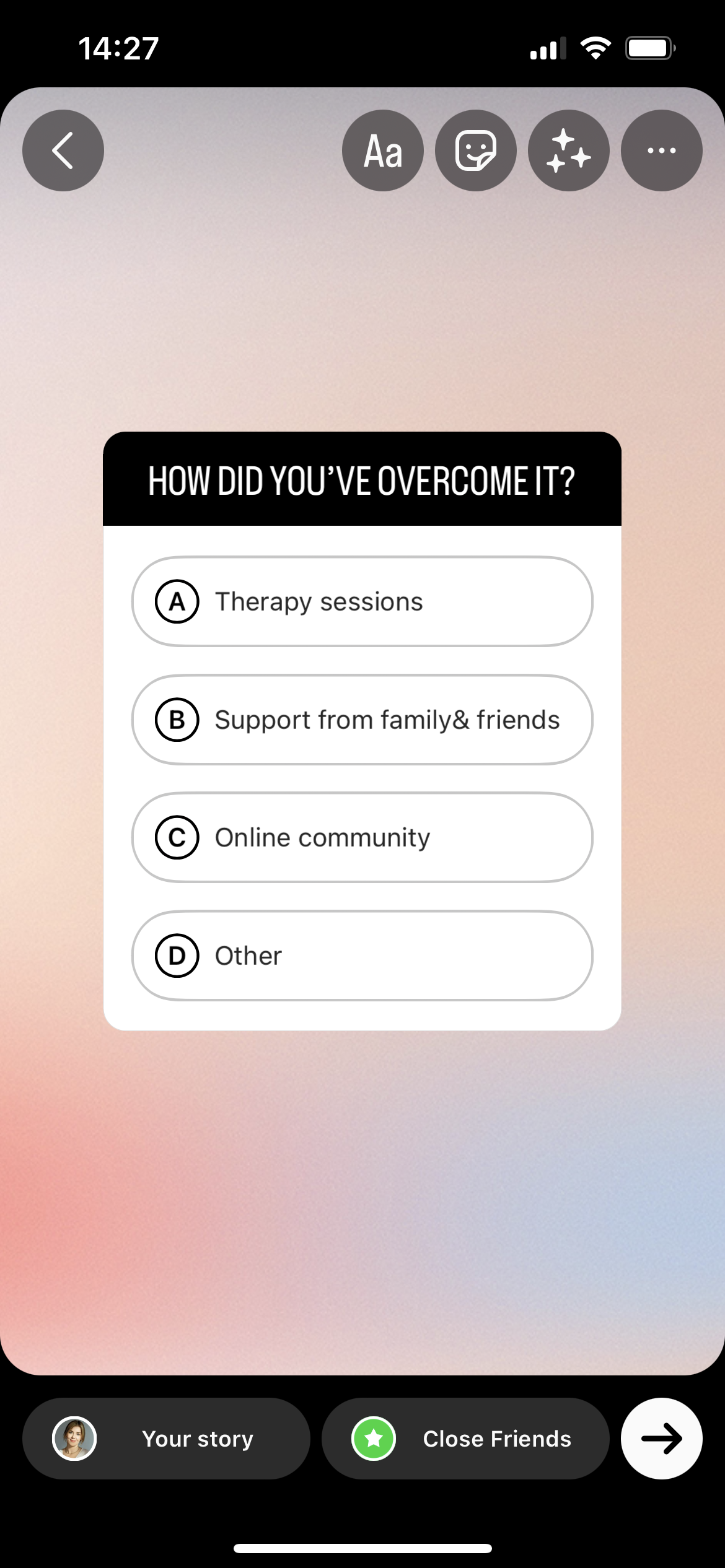
How did you overcome it?
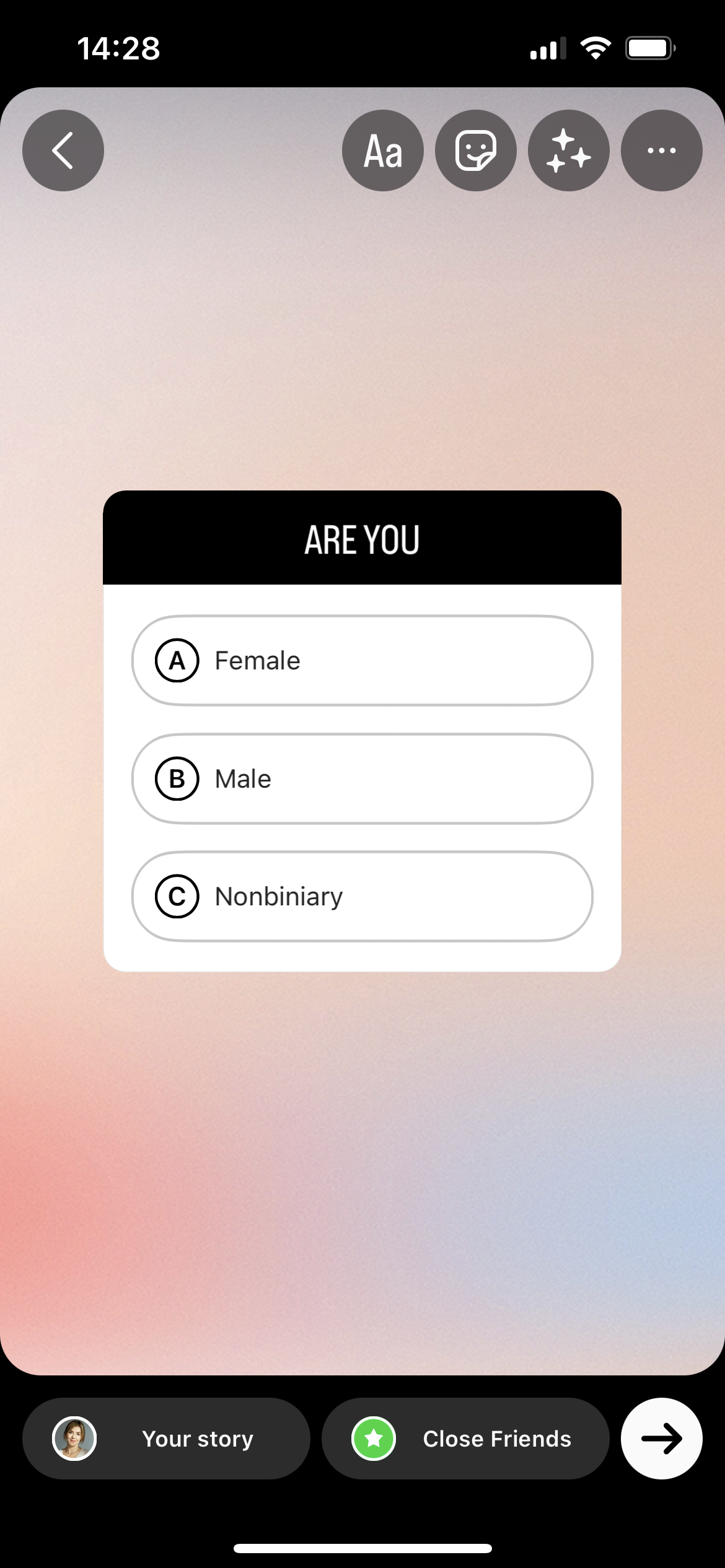
What is your gender?
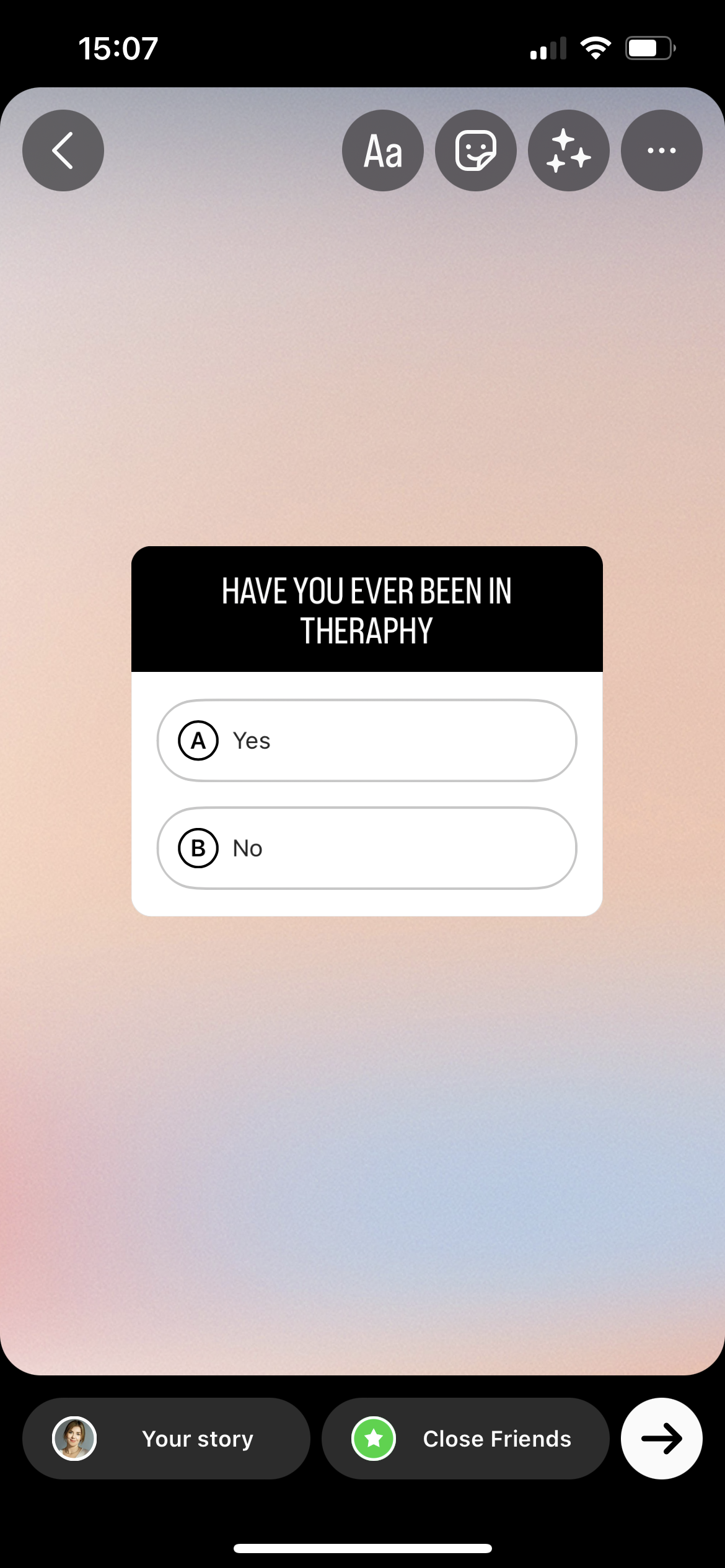
Have you ever been in therapy?
How did you overcome your struggles?
Here are the results:
Have you ever struggled with mental health?
60% yes 40% no
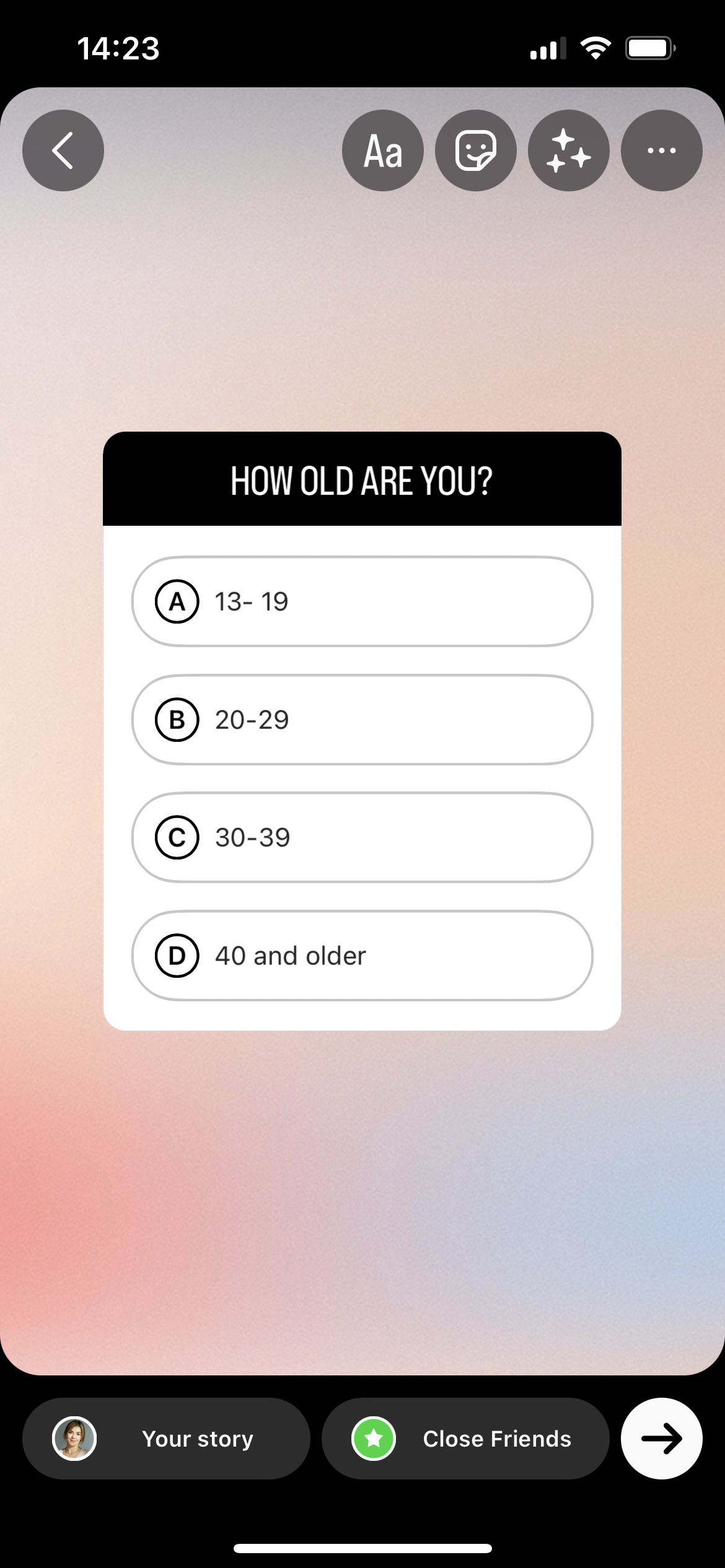
How old were you when you first struggle with mental health?
13-19: 40%
20-29: 28%
30-39: 17%
40 and more: 5%
Where do you live?
Poland: 70%
UK: 20%
Other: 10%
How did you overcome it?
Therapy session 10%
Support from family and friends 40%
Online Community 39%
Oher 11%
What is your gender?
Female: 70%
Male 30%
Nonbinary 0%
Have you ever been in therapy?
Yes: 30
No 70
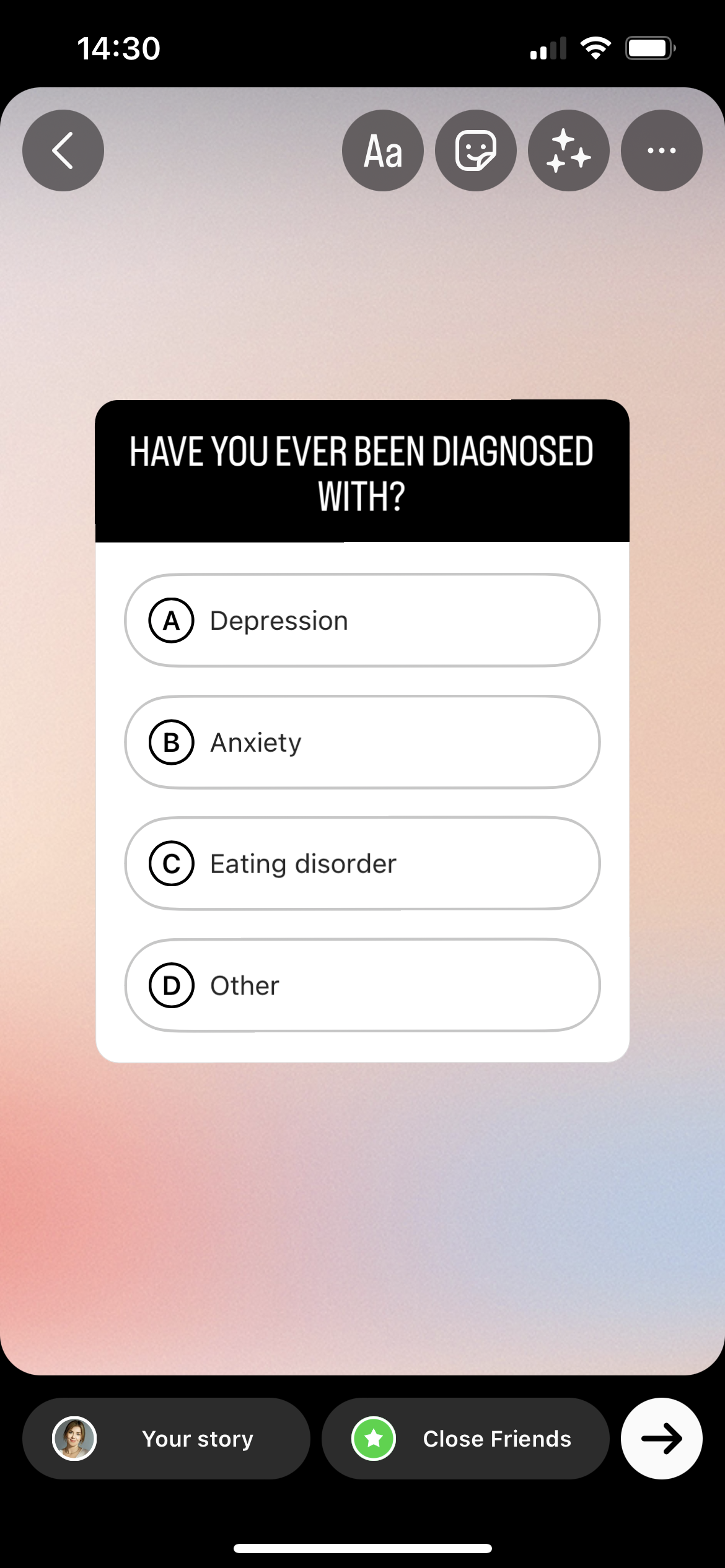
Have you ever been diagnosed with:
Depression
Anxiety
Eating disorder
I’ve pre-empted my followers that the questions were asked for academic research and that I will respect the privacy of the participants. There were two results that surprised me the most. Of 186 participants, 112 have admitted that have struggled with mental health in the past. The average age that the participants struggled for the first time was 18, however, 40% of the responders admitted that they struggled with mental health under the age of 14.
The second surprising outcome was the fact that many of the participants have never admitted to their closed community that they have struggled and instead have used the Internet as a source of information and support with their struggles.
Instagram questionnaires offer a range of benefits, from increased engagement and interactivity to feedback gathering and market insights. When used effectively, they can enhance the user experience and provide opportunities for content creators, businesses, and individuals to connect with their audience in a meaningful way. However, while this tool can be a fun, quick, and interactive feature, they also have some potential drawbacks that I need to take into concentration before I make my conclusions
Limited response options: it often provides pre-determined response options in the form of stickers or emojis. This can limit the flexibility and nuance of the answers, as users may not find a suitable option to express their thoughts or feelings accurately.
Superficial engagement: The nature of Instagram questionnaires tends to promote quick and superficial interactions. Users typically respond with brief and casual answers, which may not foster in-depth discussions or meaningful conversations.
Biased or skewed results: They can be highly influenced by the followers or users who choose to engage with them. This can create a biased sample, leading to skewed results that may not accurately represent a broader population or diverse perspectives.
Limited context: They often lack the ability to provide additional context or background information about a question. This can lead to misunderstandings or misinterpretations, as users may not have enough information to form an informed opinion.
Privacy concerns: When using Instagram questionnaires, users should consider the privacy implications of sharing personal information or opinions publicly. While Instagram offers privacy settings, users should be cautious about sharing sensitive or private information through this feature.
Lack of anonymity: Instagram questionnaires typically display the usernames of participants, which can deter some users from sharing their honest opinions or engaging in sensitive topics due to fear of judgment or repercussions.
Potential for trolling or abuse: Like any public feature on social media, Instagram questionnaires can be susceptible to trolling or abusive behavior. Some users may use the feature to spread hate, harass others, or provoke negative reactions.