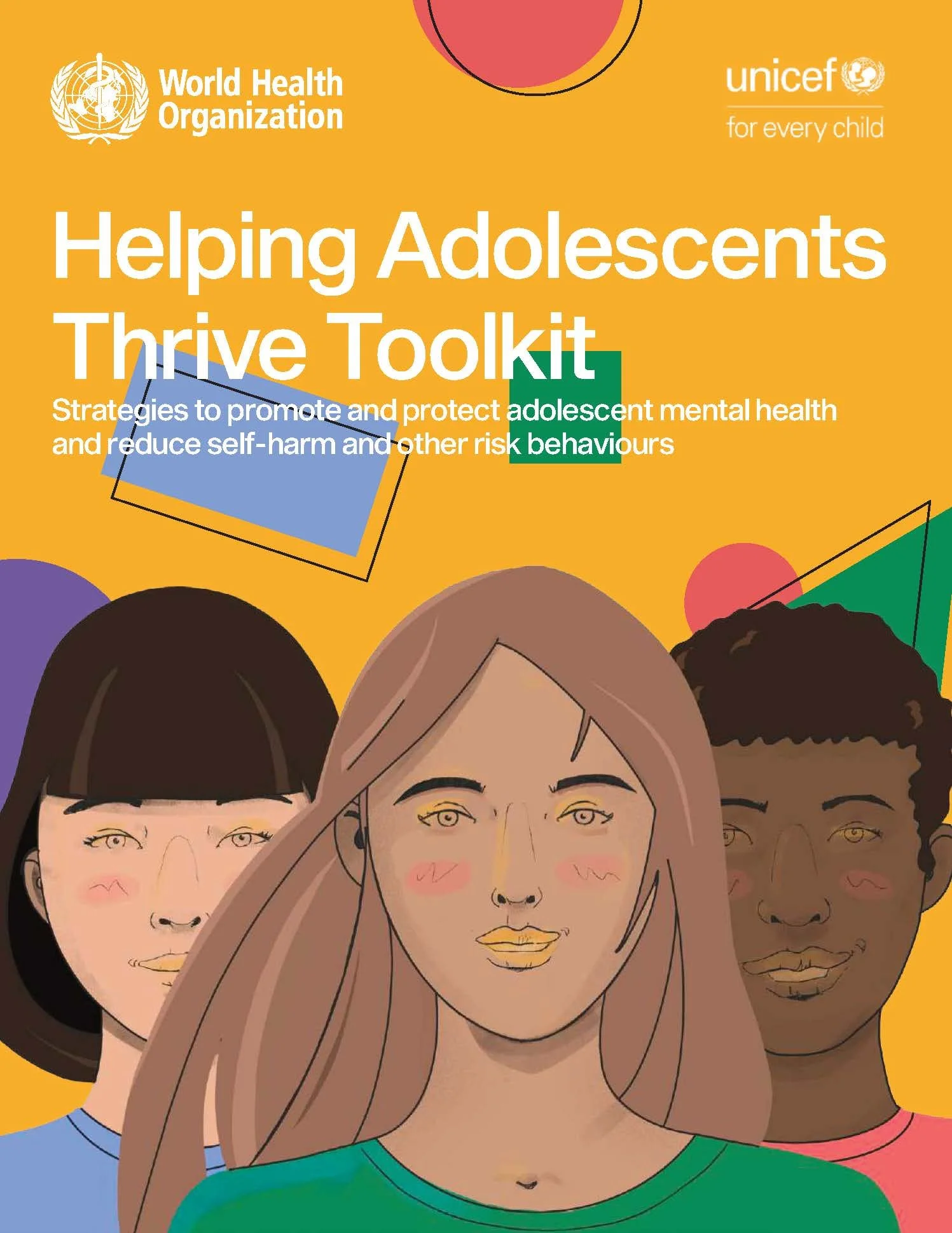
The Helping Adolescents Thrive (HAT) Toolkit, developed by the World Health Organization (WHO), is a resource that aims to promote the well-being and mental health of adolescents. The toolkit provides evidence-based strategies and practical guidance for professionals working with adolescents, such as teachers, healthcare providers, and community workers.
The HAT toolkit is informed by the social-ecological model, highlighting the importance of addressing risk factors at the individual, family, community, and societal levels to promote and protect adolescent mental health, with due attention to sociocultural contexts and care systems. The toolkit describes core principles that should guide programming efforts – including ensuring that responses are equitable and inclusive, gender-sensitive and gender-responsive, developmentally appropriate and guided by adolescents’ evolving capacities, and that they actively involve both adolescents and their parents/ caregivers in the planning, design, implementation, and evaluation of programming, and not only as beneficiaries. It is critical to plan for large-scale implementation beginning from the planning phase for the roll-out of the HAT strategies.
The HAT Toolkit focuses on four key areas that are crucial for adolescent well-being:
Nurturing relationships: It emphasizes the importance of positive relationships with family, peers, and other significant individuals in an adolescent's life. The toolkit provides guidance on effective communication, conflict resolution, and building supportive environments.
Life skills: It helps adolescents develop essential skills such as problem-solving, decision-making, critical thinking, and empathy. These skills enable adolescents to navigate challenges, make informed choices, and build resilience.
Positive school environments: The toolkit promotes safe, inclusive, and supportive school environments that foster learning, emotional well-being, and social development. It provides strategies for addressing bullying, promoting mental health, and enhancing student engagement.
Access to adolescent-friendly health services: It emphasizes the importance of providing accessible, confidential, and youth-friendly health services that address both physical and mental health needs. The toolkit provides guidance on improving healthcare delivery and addressing barriers to accessing services.
The HAT Toolkit includes practical tools, case studies, and resources that professionals can use to implement the strategies in their work with adolescents. It aims to empower professionals and communities to create supportive environments that enable adolescents to thrive and reach their full potential.